
a small and quiet light
Clouded Courage
a small and quiet light
by Stephanie Street
Chichester Festival Theatre and Orange Tree Productions at the Orange Tree Theatre, Richmond until 24th October
Review by John Davies
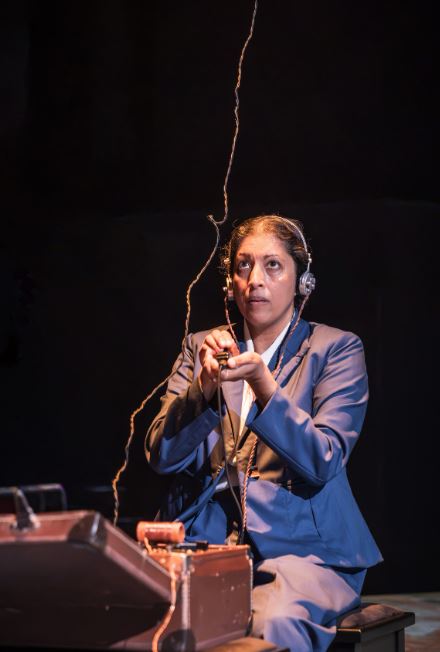
So, what’s in a name? Or more precisely who’s behind the name? Stephanie Street’s play a small and quiet light tells of a young woman, known by many names: Babuli, Jeanne-Marie, Nora, Madeleine – an undercover World War Two operative, who is being questioned by the Gestapo while reflecting upon her life. The story is not complete; we are left with gaps in her journey and no definitive ending, but we are given a glimpse into some of the events, feelings and relationships that shaped this remarkable life.
For me, at least, Noor-un-Nisa Inayat Khan was unknown, but hers is an important story and one that deserves wider dissemination. Noor was a Second World War spy codenamed Madeleine. She was a Special Operations Executive (SOE) agent relaying covert wireless messages from within Nazi-occupied Paris – one of the first women in such a role – who showed extraordinary courage and remarkable undercover expertise that enabled her to remain untraced for far longer than most ‘behind the lines’ wireless operators at the time. She is most definitely a hero of World War Two, but as the play unfolds, we discover more of her life and the path that led her, ultimately, to be betrayed and captured.
The production centres on Noor’s three-month interrogation by a Gestapo officer, but with memories – key moments – of her life. We learn she was born in Russia to an American mother and Indian father, but lived variously in France and England. She seems a little rootless and there are various questions of who she is and where her affinities lie. “Know thyself” seems to be a key thread. Noor was an avid writer of children’s stories and poetry, and it is interesting to note that her father had “stories” of his own – meeting Debussy and Tolstoy – perhaps inspiring her daughter’s love of stories. The whole play seems crafted around the idea of Noor’s life being a series of stories, which each reveal a little more about Noor’s identify and how she perceived herself.
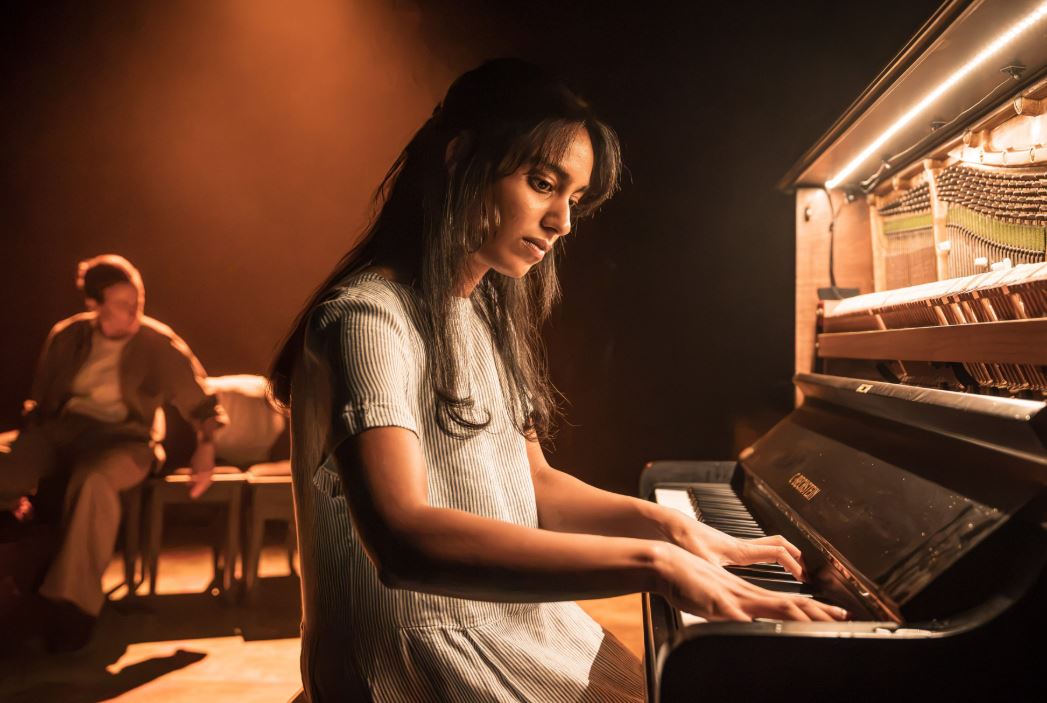
The flashback sections at first seem to fragment the play; with the opening scene not being clear until the very end of the play. However, the narrative structure quickly settles as it became apparent we are following her life sequentially from young girl to spy through a series of key moments; her childhood sleep-walking; her father leaving home for India; and her piano practice (seeking to master Debussy’s Clair de Lune), each of which punctuates her interrogation. The past reflections give the impression of how her mind might be reaching back to memories to remove herself from the claustrophobic Gestapo office and the relentless questioning from her interrogator; memories which might sustain her, provide comfort or possibly some form of explanation for her circumstances.
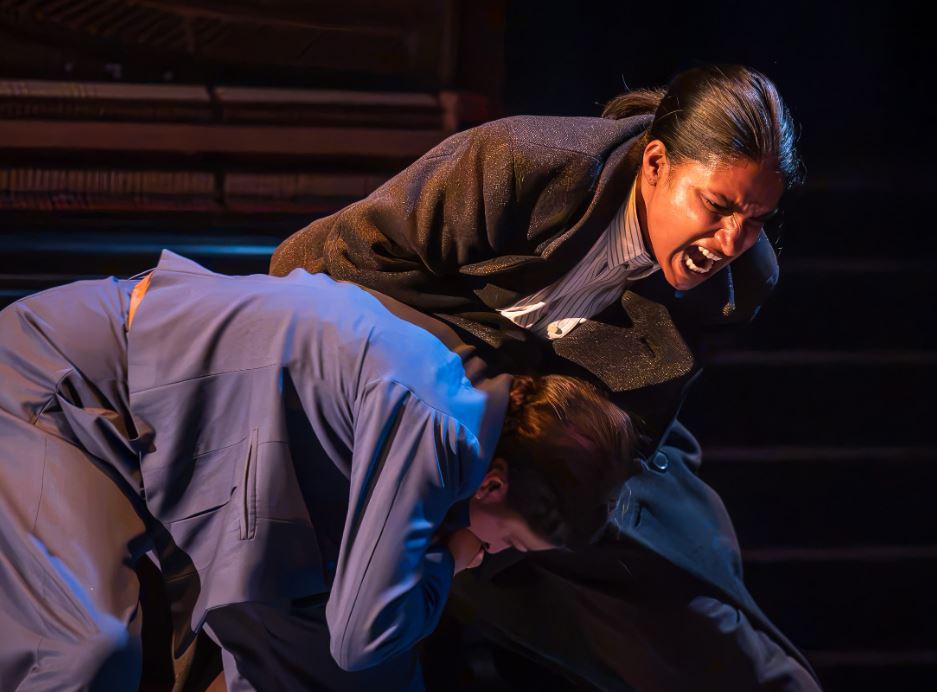
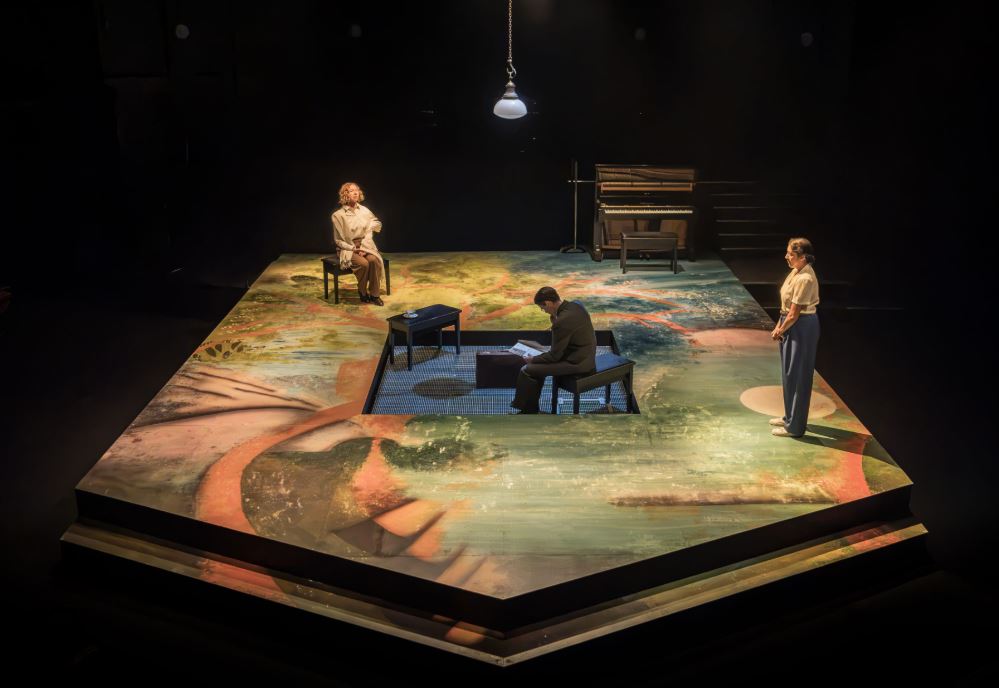
The staging is minimal: a central pit where Noor’s interrogations take place – more like a cell than an office – with the surrounding area used for the scenes of her life beyond her inquisition. Props are piano stools, linking to the recurring memory of her childhood piano practice, plus her ever-present suitcase containing the wireless equipment. A relentless low drumming or throbbing sound accompanies the interrogation scenes and the opening strains of Clair de Lune accompany Noon’s past and present; like a motif to her life. Lighting likewise is bare, but effective; focused on the cell or tight onto Noor herself when necessary.
Otherwise, the characters take central stage and here the production is strong. Priyanga Burford as Noor is excellent – conveying her need to get things absolutely right: her piano playing, her stories, her timing for sending messages, along with a sense of never really being settled; continually on the move and unclear about where is truly home. It is a very pared-back, emotionally restrained performance – and all the better for it, as this serves to heighten both the sadness of her losses, her goodbyes and the ultimate terror of her final days.
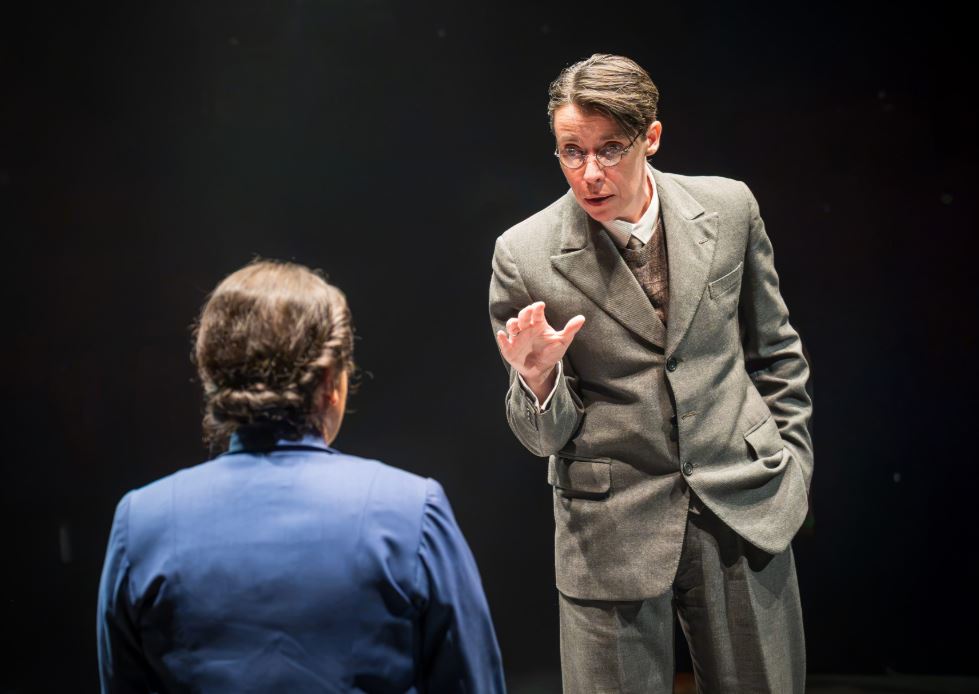
All the roles are played by female actors – possibly a further nod to questions of identity. For me this meant some of the aggression and male-posturing was lost from the scenes with the Nazis. That said, this is a strong ensemble cast playing multiple roles, with Amanda Hadingue (Noora’s mother / Special Ops handler) and Léa Des Garets (Noor’s sibling / her lover in France) particularly standing-out for their ability to convey such distinct characters with differing emotional connections to Noor. Working within a fairly confined performance space, the Director, Elin Schofield, has ensured that the scenes never feel static and flow smoothly. My only query is that I couldn’t see the reason to have Noor as young girl portrayed sometimes by the main actress and sometimes by a younger actress, but this is a minor point within the overall strength of the production.
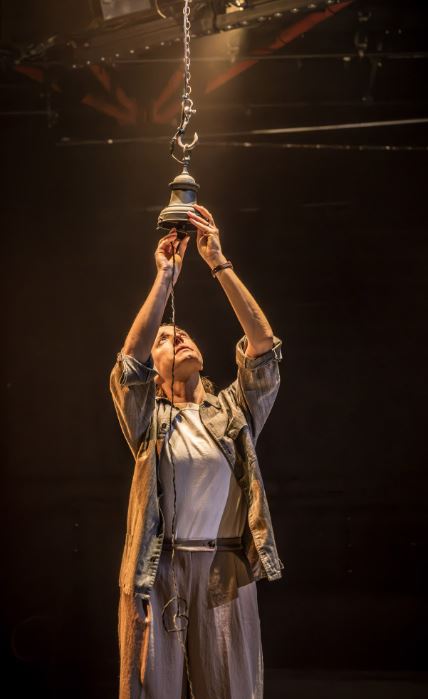
The programme notes call this a “fictional imagining based on the real-life events, as not all records align and Noor’s final days remain somewhat clouded”. While we know Noor’s final destination is Dachau, the play’s final destination is less defined. We are presented with one scenario and then the lights go up and Noor discusses how we might want to remember her final hours – in a comfortable, companionable way or maybe a harsher reality. It is an interesting device that sits outside the play’s narrative, while still being part of it, since it is a commentary by Noor herself; a discussion of storytelling and how stories – her story – might end. Perhaps being a spy was her logical destiny – the chance to create a narrative of her own telling, her own making. It is certainly a story that deserves to be heard. And a production that deserves to be seen.
John Davies, September 2026
Photography by Marc Brenner


