
Dracula
Fangs a Lot
Dracula
by Bram Stoker, adapted by Nick Lane
Reading Rep and Blackeyed Theatre at the Reading Rep Theatre until 10th October
Review by Sam Martin
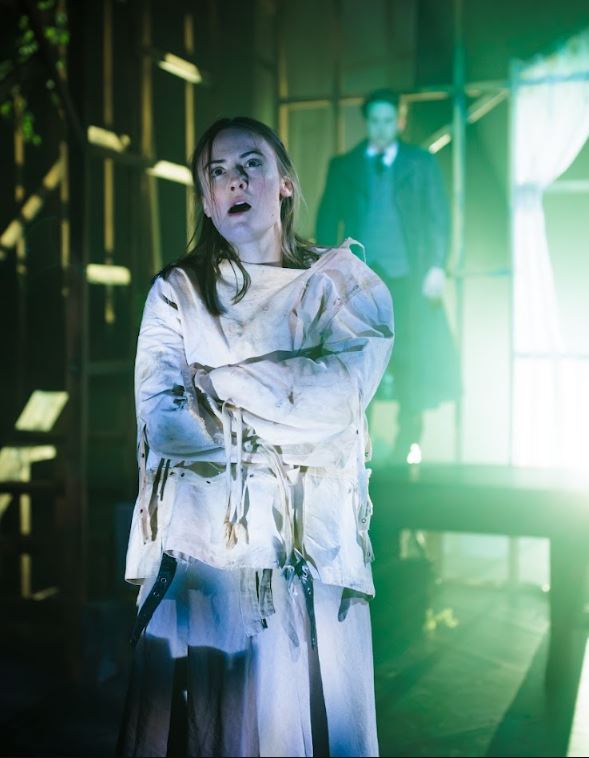
Blackeyed Theatre’s Dracula arrives at Reading Rep with all the menace, theatrical ingenuity, and Gothic atmosphere one might expect from Bram Stoker’s enduring tale. Yet it is the production’s new surroundings that give this revival a particularly compelling bite. Having previously seen it staged in a considerably larger theatre, I found that Reading Rep’s intimate auditorium transforms the experience. The audience is drawn closer to the action; every shadow seems darker and every approaching footstep more threatening. The result is a production that feels enticingly immediate, as though Dracula has slipped free from the stage and entered the room beside us.
Nick Lane’s adaptation remains faithful to the essential shape of Stoker’s novel, moving from Jonathan Harker’s ominous journey into Transylvania through the voyage of the Demeter, Lucy Westenra’s corruption and the final pursuit of the Count. Letters, journals and direct address allow the story’s many perspectives to unfold with clarity. At times, the sheer amount of narration briefly restrains the momentum, but Hal Chambers’ direction ensures the production seldom remains still for long. Scenes form and dissolve with remarkable fluidity, carrying the audience effortlessly between countries, characters, and periods of time.
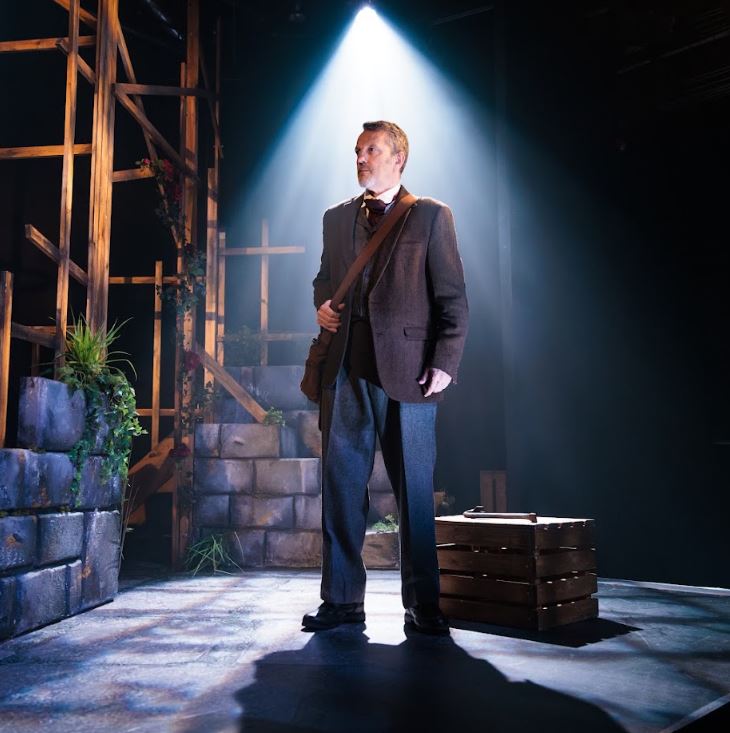
The opening establishes the production’s tone beautifully. Sinister music accompanies the actors as they enter with slow, deliberate movements before gathering in an expressionless tableau. Their low Latin song and repeated declaration that “there are such beings as vampires” create an immediate sense of ritual. When three actors move forward together as Dracula, the Count becomes more than one individual: he is a shared, inescapable presence capable of materialising wherever the story requires him.
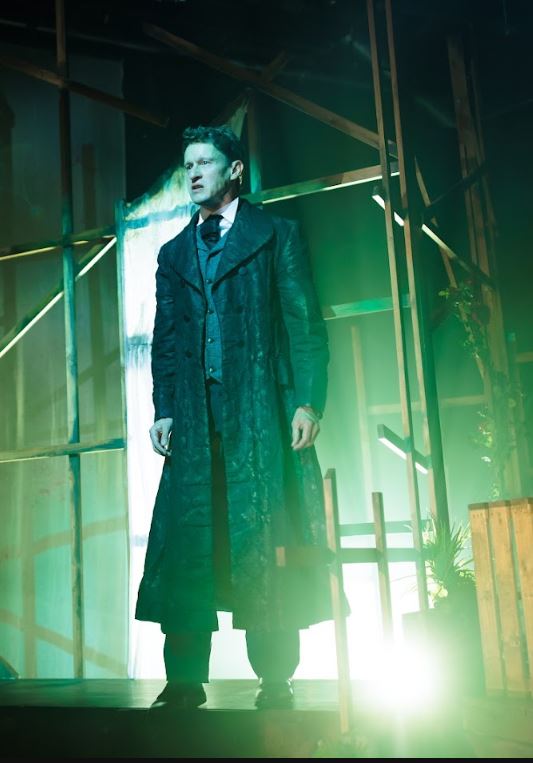
David Chafer, Richard Knightly and Harry Rundle divide the role of Dracula between them, each maintaining the character’s unnerving stillness, measured speech and predatory focus. The decision gives Dracula a supernatural omnipresence while showcasing the exceptional versatility of the six-person ensemble. Chafer, Pippa Caddick, Maya-Nika Bewley, Nicholas Prasad, Knightly and Rundle collectively portray a substantial cast of characters, moving between roles with slickness and precision.
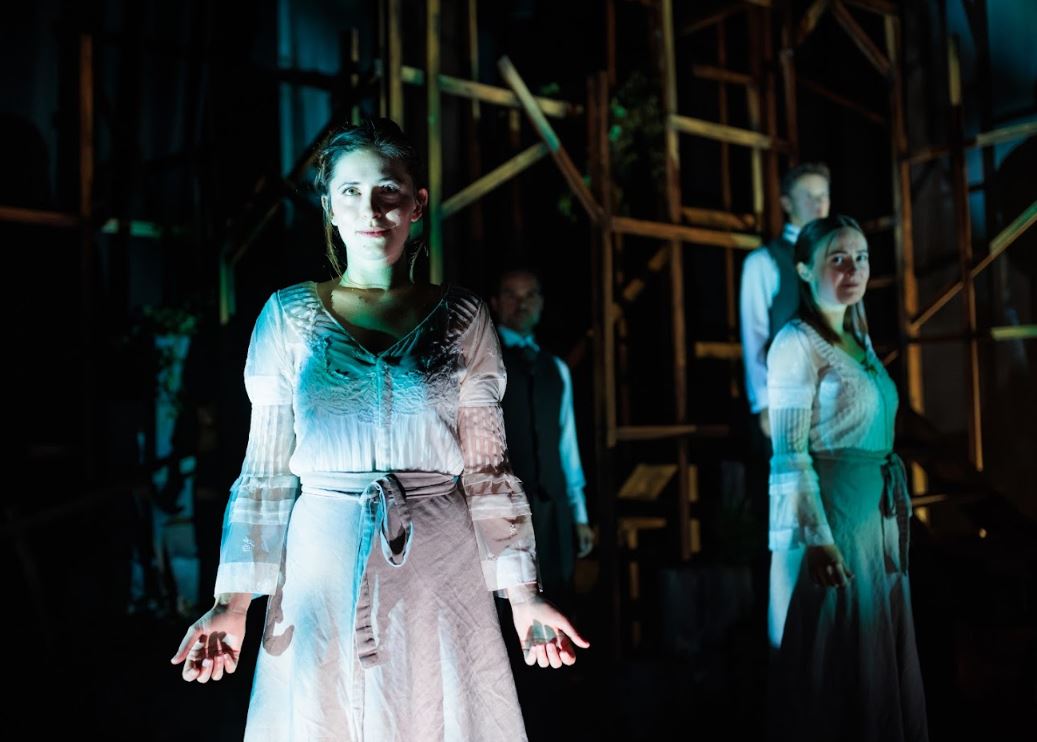
Nicholas Prasad makes Jonathan Harker’s mounting terror increasingly palpable, while Rundle brings genuine emotional weight to Arthur Holmwood’s grief. Chafer’s Van Helsing is carefully differentiated through slower movement and an assured physicality, and Knightly gives Jack Seward a compelling nervousness that deepens into guilt and despair.
Maya-Nika Bewley brings warmth and sincerity to Mina, particularly in her tender friendship with Lucy. Pippa Caddick is equally impressive, charting Lucy’s journey from playful excitement to physical weakness and supernatural corruption before transforming again into the tormented Renfield. The actors’ heightened physical performances never obscure the humanity beneath the Gothic surface; instead, they make moments of fear, loss and regret resonate more deeply.
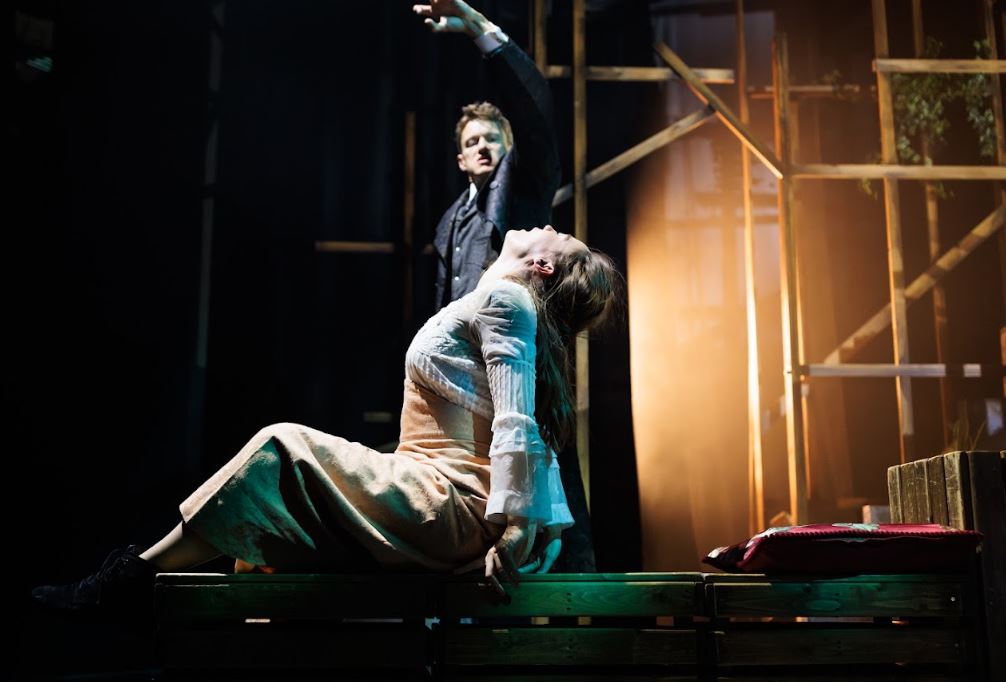
Victoria Spearing’s multifunctional set is deceptively simple but wonderfully evocative. A wall-like structure formed from wooden crosses suggests castle, abbey, asylum and prison, while crates and planks become a train, carriage, table, bedroom, ship and coffin. The audience is never asked to wait for the next location to appear. Instead, each new setting grows organically from the last, assembled by the company as part of the action. This constant transformation keeps the storytelling alive and celebrates the imaginative possibilities of theatre.
The voyage of the Demeter is particularly inventive. The cast construct the ship while singing a sea shanty, then establish its daily routines through repeated, synchronised movements. As the weather worsens and members of the crew vanish in sudden blackouts, the familiar actions become increasingly frantic and difficult. Rain, waves and flapping sails surround the remaining sailors until the captain stands isolated: the final victim. The sequence is economical, precise, and deeply unsettling.
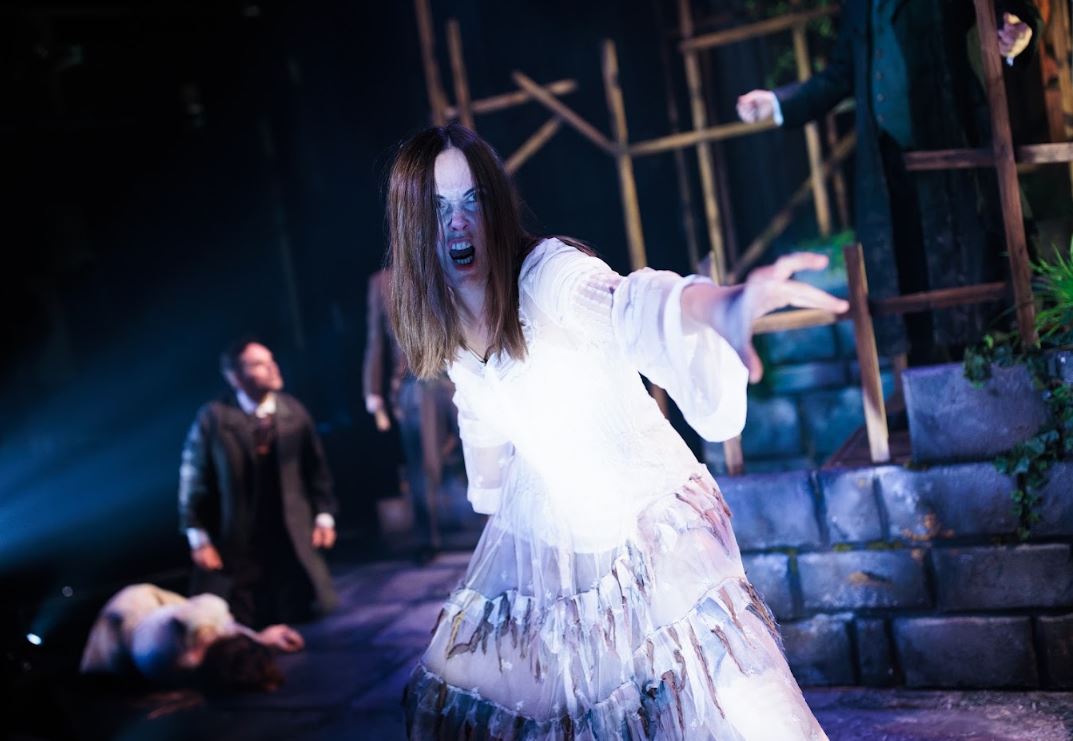
Tristan Parkes’ music and soundscape are vital to the production’s atmosphere. Wolves snarl beyond locked doors, bats beat their wings in the darkness and thunderclaps punctuate moments of revelation. At other times, the actors produce the sounds themselves, strengthening the impression that this world is being conjured collectively before us. Oliver Welsh’s lighting is equally accomplished, moving from the warmer tones of Mina and Lucy’s friendship to cold washes, flickering firelight and looming shadows. The wooden structure casts distorted patterns across the stage, making the set appear capable of shifting shape even when it remains still.
The result is a slick, atmospheric and exceptionally well-crafted piece of ensemble theatre. Blackeyed Theatre’s production was impressive on a larger stage, but Reading Rep’s intimacy makes its shadows feel closer and its dangers more immediate. Lane’s adaptation, Chambers’ fluid direction, and the outstanding production elements bring Stoker’s world vividly to life. As the company returns to its warning that “there are such beings as vampires”, it feels less like a line from an old story than a reminder to check what may be waiting just behind us.
Sam Martin, September 2026
Photography by Harry Elletson


